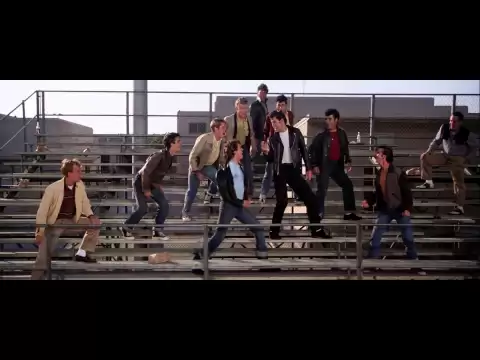
Live Streaming Option: Ad-Free Nostalgia
Grease: The Musical That Rocks Our Airwaves
The timeless charm of the Grease musical and its unforgettable soundtrack. Dive into the iconic Grease songs that continue to resonate with audiences today. Join us in celebrating the era that defined a generation!
NEON MEMORIES
SERGIO DUARTE
10/18/20252 min read
Grease: The Era That Still Rocks Our Airwaves
Imagine stealing a guitar, leather jacket, or slicked-back hair moment—but not in the ’50s, when Grease is set, but in 1978, when it was actually filmed. That’s part of what makes Grease such a timeless cultural phenomenon: set in the 1950s, released in the late ’70s—but still living in our radios, playlists, and hearts today.
What Decade Is Grease Really From?
Released June 16, 1978, Grease is very much a product of the late 1970s—though its story takes place in the heat-wavering summer of the 1950s.
It exploded at the box office, drawing in a worldwide audience. With a budget of just $6 million, the film grossed around $396 million globally — an enormous return.
Its soundtrack became a juggernaut too. In 1978, Grease’s album was the second best-selling in the U.S. (just behind Saturday Night Fever) and eventually sold over 30 million copies worldwide
The Voices Behind the Magic
Olivia Newton-John (Sandy)
Born in Cambridge, England, in 1948, Olivia moved to Australia at a young age where her musical career began to take shape.
Before Grease, she was known for hits like If Not For You (1971) and Let Me Be There (1973), the latter earning her a Grammy.
Sandy’s transformation—from innocent, sweet to rebellious leather-clad—is one of Grease’s most iconic moments. It also marked a shift in Olivia’s own style in music after the film. RADIO 98 FM Rio
John Travolta (Danny Zuko)
Travolta had already proven himself in Saturday Night Fever a year earlier and was riding a wave of fame when he took on the role of Danny Zuko.
His performance in Grease reinforced his status as a pop-culture icon: equal parts rebellious teen, dancer, love interest—and still charming decades later.
Frankie Valli
The singing voice for the title track “Grease” wasn’t from Olivia or John, but from Frankie Valli, famed lead singer of The Four Seasons.
His contribution connected old-school rock ’n’ roll sensibilities with the newer pop-musical movie model—a bridge between eras.
Hits That Defined a Generation
Songs like “You’re the One That I Want” and “Summer Nights” topped charts across the U.K. and the U.S. for weeks. RADIO 98 FM Rio
“Hopelessly Devoted to You” earned an Oscar nomination for Best Original Song—another mark of lasting cultural impact. RADIO 98 FM Rio
Decades later, these tracks continue to play at weddings, karaoke nights, and on the radio—sometimes even topping lists of greatest movie songs.
Why Grease Still Matters
It’s more than nostalgia. Grease works so well across decades because:
It captures universal themes: adolescent longing, identity, peer acceptance, first love.
The visuals, fashion, dance, and soundtrack all give it a strong identity — so even if you weren’t alive in the ’50s or ’70s, you know the world of Grease.
The duality of eras: 1950s setting + 1970s production means it can resonate in multiple ways. Audiences in each era find something in it.
Legacy & What Comes After
Grease 2 followed in 1982, continuing to build on the mythos. RADIO 98 FM Rio
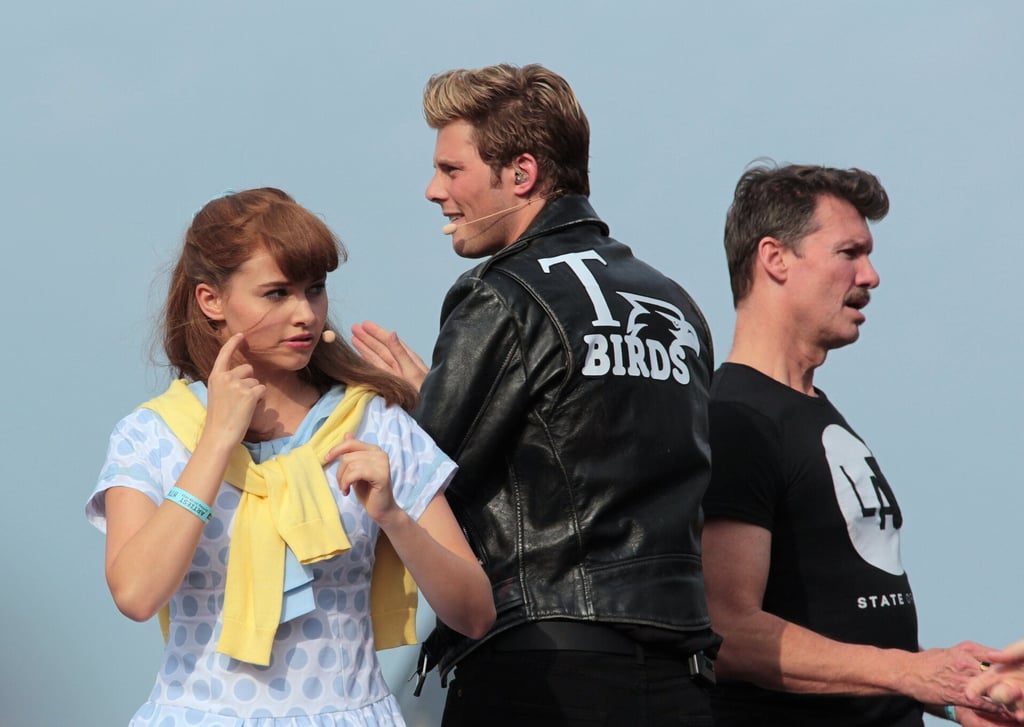
In 2016, Grease: Live! brought the story back in a new format, and it was met with strong reviews and even Emmy nominations. RADIO 98 FM Rio
The actors’ careers evolved: Olivia Newton-John went on to major music success; John Travolta, after ups and downs, came back big with films like Pulp Fiction. Frankie Valli’s legacy with The Four Seasons also remains potent.